
Helpful Resources
We have a range of Jewish and general resources to help
guide and support you.
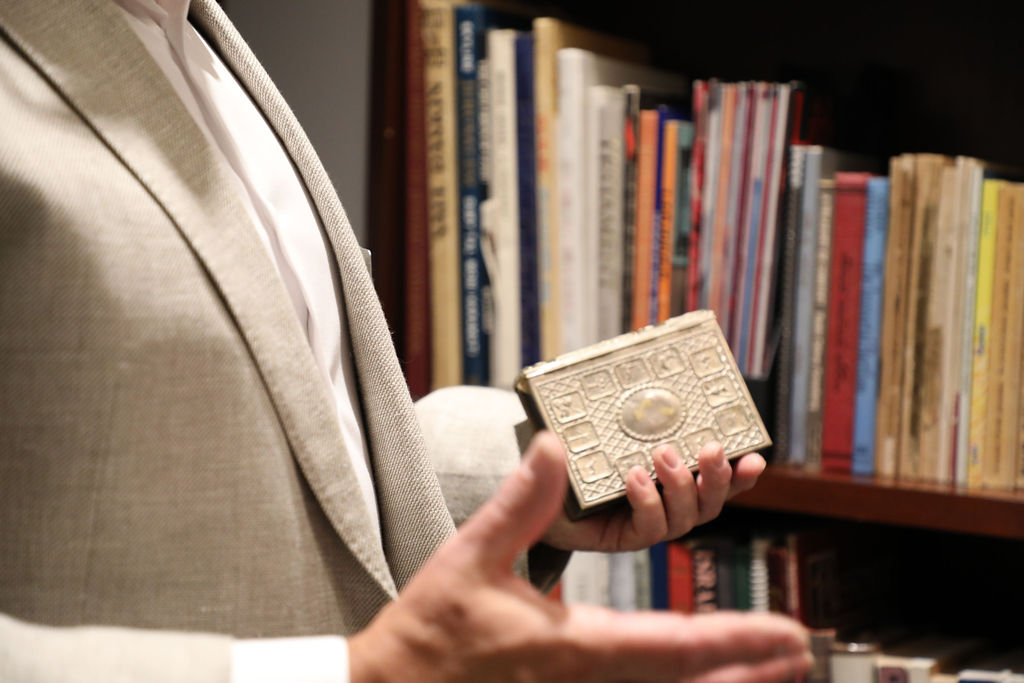
A rich heritage
Jewish Tradition
We have a treasury of Jewish wisdom to help us navigate death and grief. Rooted in ancient tradition, our rituals and practices remain meaningful in modern times.
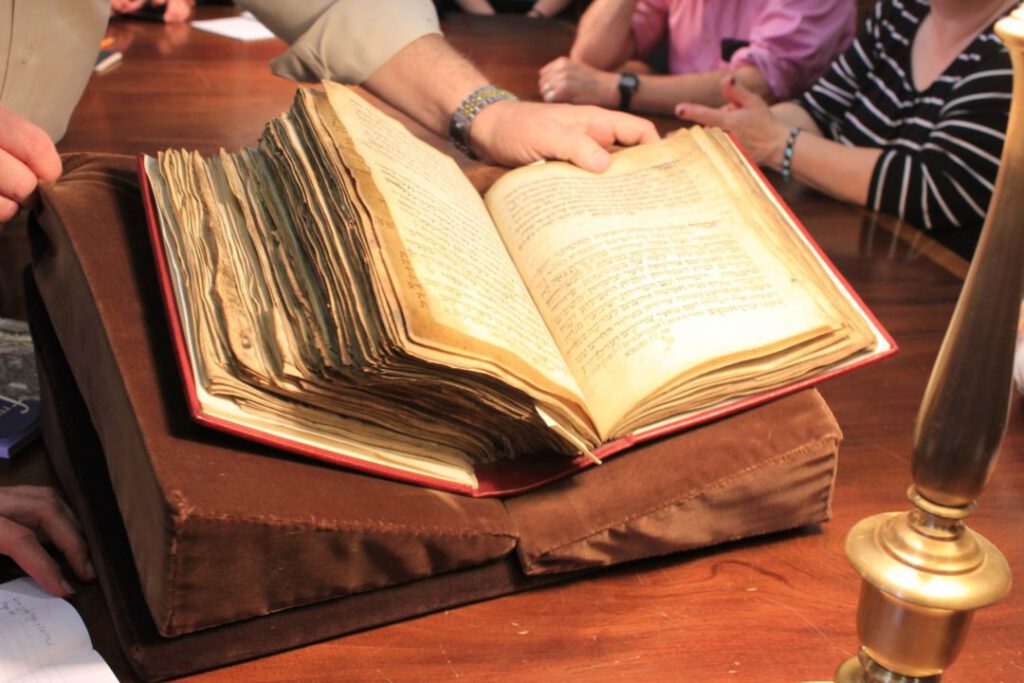
Psalms & Prayers
Suggested readings spanning the continuum from sickness to death and mourning.
Our Sacred Work
- Shmira – The Guarding
- We show respect and compassion for the soul in transition by guarding or sitting vigil with the deceased after death.
- Tahara – The Preparation
- A beautiful ritual of washing and dressing the deceased with prayer and intention; physical cleaning and spiritual purification.
- Tachrichim – The Burial Outfit
- A set of modest and simple cotton garments symbolizing holiness and equality. Our tachrichim are sewn locally by our volunteer sewing circle.
- Aron – The Casket
- A kosher casket is made of wood with no metal components.
We offer one style of casket with rope handles. - Kvurah – In-ground Burial
- Burial in the ground is a fundamental element of Judaism as found in the Bible. We return our bodies to the earth as our soul returns to its essence.
Frequently Asked Questions
Whether one is pre-planning, needing immediate assistance or simply curious about Jewish tradition and practise, we offer information and resources to guide you.
No. We do not open the casket or hold viewings. The face of the deceased is kept covered out of respect – we do not look at them in their most vulnerable state.
Sacred texts and ritual items (mezzuza scrolls, t’fillin) which contain the name of God are considered to be holy and are not thrown in the trash. We store books and other materials, and organize a book burial ceremony open to the public.
Yes, adult children are allowed to be pallbearers. Cohanim are forbidden from contact with the dead except for immediate relatives – parents, siblings, spouse or child.
Other Resources
My Jewish Death – A documentary by Saul Henteleff
My Jewish Death In 2004 Sheldon Oberman, a Jewish storyteller from Winnipeg, passed away. At his funeral the presiding Rabbi said that Sheldon’s spirit was with the congregants in the sanctuary. For filmmaker Saul Henteleff this was a revelation that began a personal and spiritual journey into the meaning of Jewish death. My Jewish Death is the result of this journey. Creative team Writer/director/producer: Saul Henteleff
My Jewish Learning
Explore Jewish Life and Judaism at My Jewish Learning, your go-to source for Jewish holidays, rituals, celebrations, recipes, Torah, history, and more.
Shiva – The Resource for Jewish Mournning
Learn about Jewish mourning, shiva traditions, customs and more.
Ematai
Navigate healthcare choices with Jewish wisdom
Jewish Heritage Centre of Western Canada
The Jewish Heritage Centre of Western Canada is an incorporated non-profit multi-faceted organization involved in preserving, documenting, interpreting and sharing Jewish heritage.
Advance Care Planning, Province of Manitoba
Advance care planning is a way to help you think about, talk about and share your thoughts and wishes about future health care.
Kavod v’Nichum
Kavod v'Nichum (Honor and Comfort) encourages and assists the organization of bereavement committees and Chevra Kadisha groups in synagogues and communities so that they can perform Jewish funeral, burial, and mourning mitzvot protect and shield bereaved families from exploitation and provide information, education and technical assistance.

Zaka International Rescue Unit
ZAKA is Israel’s primary rescue and recovery volunteer organization, with thousands of volunteers on call 24/7 to respond to any terror attack, accident or disaster. ZAKA volunteers also work in specialist search and rescue units on land and sea and the UN-recognized ZAKA International Rescue Unit operates at mass casualty incidents around the world.
Palliative Manitoba
Palliative Manitoba is a registered charity that is keenly focused on improving living until the end of life.
Jewish Child and Family Service
Jewish Child and Family Service strives to be the place in the community, where all voices are heard and needs are realized

The Jewish Daily Forward
The Forward delivers incisive coverage of the issues, ideas and institutions that matter to American Jews. Its rigorous reporting and balanced commentary on politics, arts and culture have won numerous awards year after year, including repeated recognition by the Society of Professional Journalists.

The Canadian Jewish News
The Canadian Jewish News (CJN) is a not for profit media organization, serving the Jewish community, by providing a platform for diverse points of view, on subjects of interest and relevance.

The Jewish Post and News
Winnipeg's Jewish newspaper that provides news of interest about Winnipeg's Jewish community and beyond in a frank and interesting manner.
Rady JCC
The Rady Jewish Community Centre aspires to be a vibrant and welcoming community where Jewish culture and values flourish, where families and friendships are strengthened, where healthy and active lifestyles are encouraged, and where we contribute to the well-being of the entire community by ensuring our programs and services are available to all.

The Saul and Claribel Simkin Centre
The Simkin Centre is a nonprofit personal care home that provides high quality care and services to its residents in accordance with Jewish values and traditions, including a commitment to kedushah/sanctity, derech eretz/respect for all people, and kavod/honour due each person.
Temple Shalom
A Spirited, Intimate Reform Jewish Community in Winnipeg
Jewish Federation of Winnipeg
Federation is created and shall be operated as the representative body of the Winnipeg Jewish Community, acting on behalf of our community and in support of the State of Israel and "Klal Yisrael" and, in accordance with Jewish values, to foster and maintain a strong and united Jewish community in order to provide for the culture, continuity, religious practice, spirituality, survival and welfare of Jewish life while respecting its diversity.
Congregation Etz Chayim
Congregation Etz Chayim, formed in 2002 as a result of the amalgamation of three synagogues, is the focal point of Jewish life in Winnipeg’s north end. Etz Chayim is an egalitarian Conservative congregation committed to prayer and spirituality, learning and tradition, and acts of loving kindness.
Adas Yeshurun Herzlia
Adas Yeshurun Herzlia is a Modern Orthodox congregation that believes in the philosophy of Torah u’Mada – a commitment to Torah and Halacha along with intellectual openness

Canadian Virtual Hospice – Manitoba
Information and support on palliative and end-of-life care, loss and grief.
Chabad Lubavitch of Winnipeg
Serving Winnipeg's Jewish community for over 40 years!
Jewish Foundation of Manitoba
The Jewish Foundation of Manitoba is a public foundation that manages a growing endowment fund that exceeds $100 million. Since its inception, the Foundation has distributed more than $48.5 million in grants and scholarships in the local community and across Canada.
Shaarey Zedek Synagogue
Shaarey Zedek Synagogue is a centre for Conservative Judaism that welcomes the community to experience spiritual growth, continuing education and the enrichment of lifecycle events.